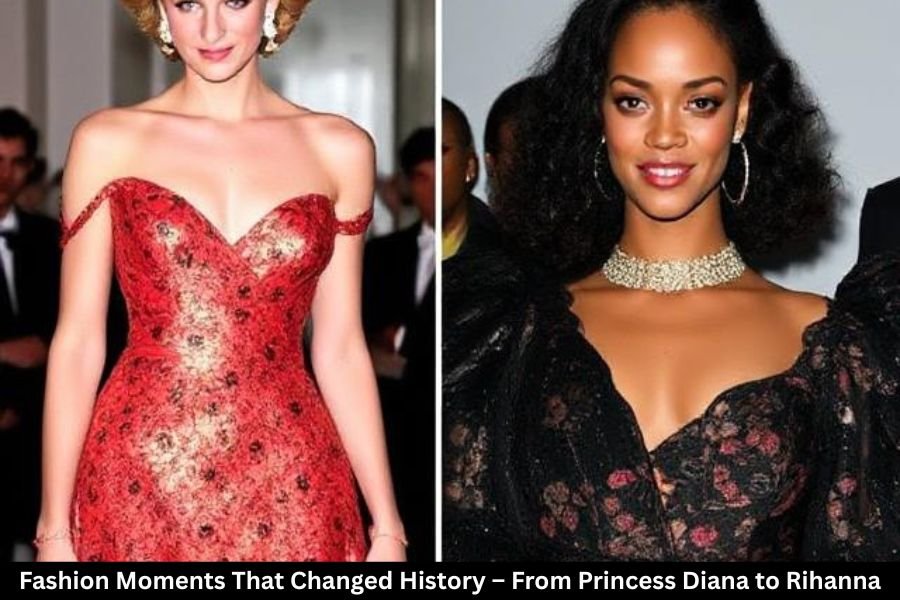
Fashion isn’t just about clothes—it’s about moments. A single outfit can challenge traditions, start conversations, and even shift cultural norms. Iconic fashion moments often capture the mood of an era, reflecting rebellion, freedom, power, or change.
Fashion as a Cultural and Social Mirror
What people wear often says more than words. Fashion reflects social movements, political climates, and personal identities. That’s why certain outfits become legendary—they stand for something bigger than fabric and design.
Princess Diana – The People’s Princess of Style
Breaking Royal Fashion Rules
Princess Diana transformed royal fashion by softening its stiff image. She wore colors, silhouettes, and styles that felt approachable and modern. Suddenly, royal fashion wasn’t untouchable—it was relatable.
The Revenge Dress That Shocked the World
Why the Revenge Dress Was Revolutionary
Diana’s black off-shoulder “revenge dress” wasn’t just bold—it was empowering. At a moment of personal pain, she chose confidence over conformity. That dress became a symbol of independence, strength, and silent rebellion.
Audrey Hepburn – Timeless Elegance Redefined
Little Black Dress and Breakfast at Tiffany’s
Audrey Hepburn’s little black dress proved that simplicity could be unforgettable. It wasn’t flashy—it was refined. That single look turned minimalism into a global fashion ideal.
Minimalism as a Fashion Statement
Hepburn showed the world that elegance doesn’t shout. Clean lines, subtle accessories, and grace became her signature—and a blueprint for timeless fashion.
Coco Chanel – Changing Women’s Fashion Forever
Freedom from Corsets
Coco Chanel didn’t just design clothes—she liberated women. By removing corsets and embracing comfort, she redefined femininity as freedom rather than restriction.
Chanel No. 5 and Iconic Tweed Suits
Her designs blurred gender lines and prioritized comfort. Chanel proved fashion could be luxurious and practical at the same time.
Marilyn Monroe – Glamour and Femininity
The White Dress Moment
That iconic white dress blowing over a subway grate became one of the most famous fashion images ever. It symbolized confidence, allure, and Hollywood glamour.
Redefining Sexy in Fashion
Marilyn owned her femininity unapologetically. She showed that fashion could celebrate curves, confidence, and individuality.
Madonna – Fashion Meets Rebellion
1980s Pop Fashion Revolution
Madonna turned lace gloves, layered necklaces, and bold makeup into symbols of rebellion. Her style screamed freedom and self-expression.
Cone Bra and Gender Expression
By wearing the cone bra on stage, Madonna challenged norms around sexuality and gender, making fashion a powerful form of protest.
Michael Jackson – Fashion Beyond Music
The Red Leather Jacket Era
Michael Jackson’s red leather jacket became instantly recognizable. His outfits weren’t costumes—they were cultural icons.
Gloves, Hats, and Global Influence
Every accessory he wore became a trend. He proved fashion could amplify identity and artistic expression.
Naomi Campbell and the Rise of Supermodels
Diversity on the Runway
Naomi Campbell broke barriers as one of the first Black supermodels to dominate global fashion. Her presence changed runway standards forever.
The Power Walk That Changed Fashion Shows
Her confident walk became legendary, turning models into stars and runways into performances.
Lady Diana vs. Traditional Royal Dressing
Casual Chic and Off-Duty Looks
Diana’s off-duty style—sweaters, jeans, and sneakers—humanized royalty. She showed that style could be relaxed and still elegant.
Humanizing Royal Fashion
Her fashion choices made royalty feel closer to real people, redefining public expectations forever.
Lady Gaga – Fashion as Performance Art
The Meat Dress Moment
Lady Gaga’s meat dress shocked the world. Love it or hate it, it made people talk—and that was the point.
Pushing Fashion Boundaries
Gaga proved fashion could be political, provocative, and deeply personal.
Beyoncé – Empowerment Through Fashion
Stage Costumes with Meaning
Beyoncé’s fashion choices often reflect empowerment, culture, and strength. Every outfit tells a story.
Fashion as Feminism
Her looks celebrate identity, heritage, and confidence, turning fashion into a message of self-worth.
Rihanna – The Ultimate Fashion Risk-Taker
Met Gala Looks That Made History
Rihanna doesn’t follow themes—she defines them. Her Met Gala appearances are masterclasses in boldness and creativity.
Breaking Beauty and Style Norms
Rihanna as a Fashion Icon, Not a Follower
From streetwear to haute couture, Rihanna effortlessly blends styles. She changed beauty standards and proved inclusivity is powerful.
Street Style Moments That Changed Fashion
From Runways to Real Life
Street style shifted power from designers to people. Everyday fashion became just as influential as high-end couture.
Youth Culture and Fashion Movements
Subcultures like punk, hip-hop, and grunge reshaped global fashion trends.
How Fashion Moments Influence Society
Politics, Identity, and Style
Fashion often reflects political beliefs, cultural pride, and social resistance. Clothing becomes a voice when words aren’t enough.
Fashion as a Voice for Change
From protest tees to symbolic colors, fashion continues to inspire conversations and movements.
The Digital Age of Fashion Moments
Social Media and Viral Fashion
One outfit can now break the internet overnight. Instagram and red carpets create instant fashion history.
How Trends Are Born Overnight
Fashion moments no longer wait for magazines—they happen in real time.
The Future of Historic Fashion Moments
What’s Next for Fashion History
Technology, Sustainability, and Expression
The future of fashion will focus on innovation, sustainability, and individuality. New icons will rise, and new moments will be made.
Conclusion
Fashion moments that changed history remind us that clothes can do more than decorate—they can empower, challenge, and inspire. From Princess Diana’s quiet rebellion to Rihanna’s fearless creativity, fashion continues to shape culture and identity. These moments live on because they captured courage, confidence, and change—stitched into history forever.
FAQs
1. Why are fashion moments important in history?
They reflect cultural, social, and political changes of their time.
2. Why is Princess Diana considered a fashion icon?
She broke royal norms and used fashion to express independence and compassion.
3. How did Rihanna change modern fashion?
She challenged beauty standards, embraced inclusivity, and redefined luxury fashion.
4. Can fashion influence social change?
Yes, fashion often communicates messages of identity, protest, and empowerment.
5. Will fashion moments continue to shape history?
Absolutely. As culture evolves, fashion will continue to document and influence change.








3 Comments
Yo, Mv66bet is alright in my book. I like the variety from it. Definitely worth the time. Quick payouts! Link here for mv66bet
Alright, checked out phclubbet. Seems like a decent spot to try your luck. Nothing too fancy, but it gets the job done. Hope I win something! phclubbet
Seubet is kinda growing on me. It’s smooth, got a good selection. I’m giving it a solid thumbs up. seubet